“In that moment, I wasn’t a passenger or a professional. I was just a father trying to find a pad for my daughter.”
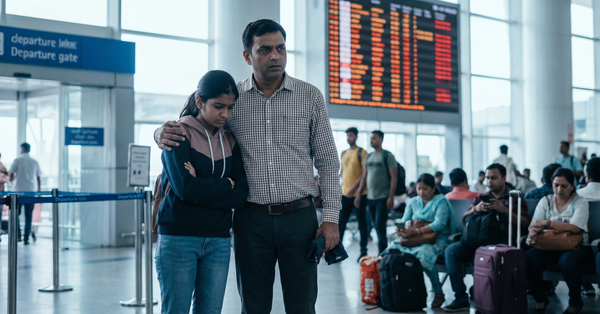
Airports are symbols of modern India, efficient, global, and technologically advanced. They manage complex logistics, security protocols, and passenger volumes with precision. Yet, during a recent IndiGo flight delay, one simple, deeply human need went unmet. A father was seen anxiously asking fellow passengers and staff for a sanitary pad for his daughter.
This was not a story about an airline delay. It was a story about what happens when menstruation meets public unpreparedness. It revealed how, even in India’s most advanced public spaces, menstrual health is still treated as an afterthought.
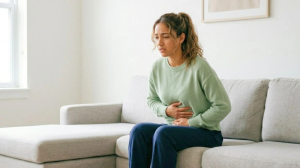
Periods do not announce themselves politely. They arrive unexpectedly, especially in adolescents, women with irregular cycles, or those under stress—such as travel delays.
In that airport moment:
This was not due to negligence by individuals. It was due to the absence of basic menstrual infrastructure. No pad vending machine. No easily accessible emergency kit. No standard protocol.
When systems fail to anticipate common biological needs, the burden falls on families—often in moments of vulnerability.
The image of a father asking for a pad struck a chord because it broke multiple silences at once.
It showed:
The discomfort in that moment was not caused by menstruation. It was caused by the lack of readiness to handle it.
Airports are equipped with:
Yet, most lack:
This omission sends a subtle but powerful message: menstruation is expected to be managed privately, regardless of circumstance. But periods do not respect schedules, boarding gates, or delays.
For the young girl, the experience likely carried:
For the father:
These emotional costs are invisible in policy discussions, yet deeply real. Dignity is not just about facilities—it is about how safe and supported people feel in moments of need.
Menstrual hygiene is directly linked to health outcomes. Delayed access to sanitary products can lead to:
Public health systems recognise prevention as a priority. Providing access to menstrual products in public spaces is preventive care, not indulgence.
Just as airports prepare for medical emergencies, they must prepare for menstrual ones.
The most common response to such incidents is: “Women should carry their own pads.”
This argument ignores reality:
No one asks passengers to carry their own fire extinguishers or first-aid kits. Public systems exist precisely for unforeseen needs.
Infrastructure reflects priorities. When menstrual needs are absent from design, it indicates:
True inclusivity requires recognising biological differences and planning accordingly. Equity is not sameness. It is fairness.
Installing pad vending machines in airports and other public spaces is:
They reduce dependence, panic, and embarrassment. They transform moments of crisis into moments of relief.
More importantly, they normalise menstruation as part of everyday life.
Public reactions to the airport incident were sympathetic, but sympathy is not enough. Viral stories fade. Infrastructure remains.
What India needs is:
One father should not have to ask strangers for a basic hygiene product in a modern airport.
The IndiGo flight delay did more than disrupt travel plans. It revealed a quiet truth about India’s readiness to support menstruating bodies in public spaces. The father’s search for a pad was not an isolated incident; it was a mirror reflecting systemic neglect.
Menstrual preparedness is not about convenience. It is about dignity, health, and inclusion. When public spaces are truly designed for everyone, no parent will have to feel helpless, and no girl will have to feel ashamed for a natural biological process.
Periods cannot wait. Our systems should not either.
About PeriodSakhi
PeriodSakhi is your trusted companion for understanding your menstrual health. With easy-to-use tools, it helps you track your periods, ovulation, fertility, moods, and symptoms, while providing insights into your overall reproductive and hormonal health. PeriodSakhi also serves as a supportive online community where women can share experiences, find reliable information, and access expert-backed guidance on menstrual health, PCOS, pregnancy, lifestyle, and more.
Disclaimer
The views, thoughts, and opinions expressed in this article/blog are solely those of the author and do not necessarily reflect the views of PeriodSakhi. Any omissions, errors, or inaccuracies are the responsibility of the author. PeriodSakhi assumes no liability or responsibility for any content presented. Always consult a qualified medical professional for specific advice related to menstrual health, fertility, pregnancy, or related conditions.
Start the conversation
No comments yet. Start the conversation by leaving the first comment!