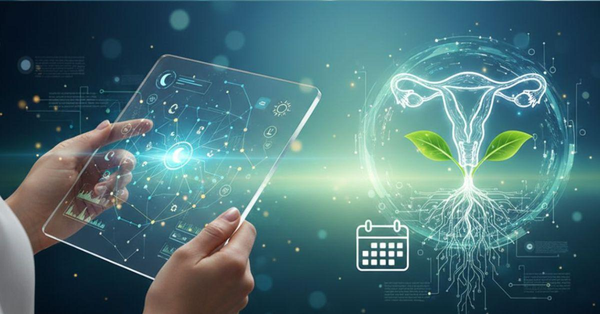
Menstrual health is more than just getting a period every month. The menstrual cycle reflects hormonal balance, reproductive health, metabolic wellbeing, and emotional wellness. Tracking your cycle helps you understand how your body functions, predict fertile windows, plan or prevent pregnancy, and detect early signs of hormonal disorders. Today, smartphone apps, wearables, and home tests make fertility tracking accessible and affordable for millions of women.
Despite growing awareness, many women still rely on guesswork or calendar counting. Understanding cycle data and how to interpret it correctly empowers women to make informed reproductive decisions.
The menstrual cycle is the monthly hormonal process that prepares the body for pregnancy. It usually lasts 21 to 35 days, though individual variation exists. A cycle begins on Day 1 of menstrual bleeding and ends the day before the next period starts.
The brain, ovaries, uterus, and endocrine system work together through hormones such as:
• Follicle-stimulating hormone (FSH)
• Luteinizing hormone (LH)
• Estrogen
• Progesterone
Tracking these hormonal patterns reveals important information about fertility and health.
Understanding the phases helps interpret fertility data accurately.
The uterine lining sheds, leading to bleeding. Hormone levels are low. Tracking flow, clots, and pain can help identify underlying conditions.
FSH stimulates follicle growth in the ovaries. Estrogen rises and prepares the uterine lining. Energy levels may improve.
A surge in LH triggers the release of an egg. This is the most fertile period. Ovulation usually occurs 12–16 days before the next period.
Progesterone rises, stabilizing the uterine lining. PMS symptoms may appear. If pregnancy does not occur, hormones drop, and bleeding begins.
Cycle tracking is not just for women trying to conceive. It provides valuable insight into:
• Predicting period dates
• Identifying fertile and infertile days
• Understanding ovulation patterns
• Detecting irregular cycles
• Monitoring PCOS, thyroid issues, or stress-related changes
• Managing PMS and PMDD
• Planning travel, work, or athletic training
• Monitoring postpartum return of fertility
• Recognizing early pregnancy signs
Tracking improves body awareness and encourages proactive healthcare.
Different women track different indicators depending on their goals.
Length, duration, flow pattern, clots, and pain levels provide basic hormonal health information.
These help estimate fertile windows:
• Cervical mucus changes
• Basal body temperature rise
• Ovulation predictor kits (LH tests)
• Mittelschmerz (ovulation pain)
Headaches, breast tenderness, bloating, energy changes, mood swings, and cravings provide insight into hormonal fluctuations.
Sleep, stress, exercise, weight, and diet may influence cycle regularity.
Color, texture, and odor help detect infections or ovulation.
Collectively, these data points create a personalized fertility profile.
Ovulation is the key determinant of fertility. If ovulation does not occur, pregnancy is not possible.
As ovulation approaches, cervical mucus becomes clear, stretchy, and slippery—similar to raw egg white. This indicates peak fertility.
Progesterone increases BBT by 0.2–0.5°C after ovulation. Charting daily morning temperature helps identify ovulation retrospectively.
These detect the LH surge in urine, predicting ovulation within 24–36 hours.
Apps help store and interpret data. However, calendar prediction alone may be inaccurate, especially with irregular cycles.
Smart rings, watches, and sensors measure temperature, heart rate, or breathing patterns to estimate fertility windows.
To maximize pregnancy chances, intercourse during the fertile window, the five days before ovulation and the day of ovulation, is recommended. Sperm can survive up to five days, while an egg survives 12–24 hours.
Tracking helps couples:
• Time intercourse
• Identify irregular ovulation
• Detect luteal phase defects
• Recognize when to seek fertility evaluation
Women under 35 should seek help after 12 months of trying; after 6 months if older than 35.
Fertility Awareness-Based Methods (FABMs) can help avoid pregnancy, but require consistent monitoring and understanding.
Popular methods include:
• Symptothermal method
• Cervical mucus method
• Standard days method
These methods are more effective when combined, but are less reliable if cycles are irregular. They do not protect against STIs.
PCOS may cause irregular or absent ovulation, making calendar-based predictions unreliable. Tracking symptoms such as cervical mucus or using OPKs may help, though some women with PCOS may have false-positive LH tests.
For PCOS, cycle data can help monitor:
• Cycle length variability
• Metabolic health changes
• Response to treatment
• Insulin resistance symptoms
Medical evaluation is essential for long-term regulation.
A healthy menstrual cycle generally includes:
• Length between 21–35 days
• Period lasting 2–7 days
• Regular, predictable pattern
• Mild to moderate cramps
• Ovulation occurring consistently
• No excessive clotting or flooding
Tracking helps determine whether your cycle falls within these ranges.
Cycle data can help identify early warning signs:
• Cycles shorter than 21 or longer than 35 days
• Missing periods for 3 months (not pregnant)
• Very heavy or painful periods
• Frequent spotting between periods
• No signs of ovulation for several months
• Sudden change in cycle pattern
• Irregular cycles after a period of regularity
These may indicate thyroid disorders, PCOS, fibroids, stress, nutritional deficiencies, or perimenopause.
• Relying only on apps without physical biomarkers
• Assuming ovulation always happens on Day 14
• Inconsistent temperature recording
• Not accounting for stress, illness, or travel
• Ignoring symptoms like pain or abnormal bleeding
Tracking should be personalised not based on averages.
Cycle history helps doctors assess:
• Hormonal imbalances
• Ovulation disorders
• Fertility status
• Risk of anemia or metabolic issues
• Response to medications
• Need for further testing
Bringing cycle charts to medical appointments improves diagnostic accuracy.
Medical evaluation is needed when:
• Periods are absent for 90 days
• Trying to conceive for over a year without success
• Severe pain affects daily life
• Very heavy bleeding causes fatigue or dizziness
• Cycles are consistently irregular
• Menstrual changes occur after age 40
• Symptoms suggest PCOS, thyroid issues, or endometriosis
Early diagnosis improves outcomes.
Cycle data and fertility tracking are powerful tools for understanding reproductive and overall health. By observing patterns in bleeding, ovulation, symptoms, and lifestyle factors, women can make informed decisions about pregnancy planning, contraception, and medical care. Tracking supports early diagnosis of hormonal and metabolic disorders and encourages proactive wellbeing. Whether using simple journaling or advanced digital tools, awareness is the first step toward menstrual health empowerment.
About PeriodSakhi
PeriodSakhi is your trusted companion for understanding your menstrual health. With easy-to-use tools, it helps you track your periods, ovulation, fertility, moods, and symptoms, while providing insights into your overall reproductive and hormonal health. PeriodSakhi also serves as a supportive online community where women can share experiences, find reliable information, and access expert-backed guidance on menstrual health, PCOS, pregnancy, lifestyle, and more.
Disclaimer
The views, thoughts, and opinions expressed in this article/blog are solely those of the author and do not necessarily reflect the views of PeriodSakhi. Any omissions, errors, or inaccuracies are the responsibility of the author. PeriodSakhi assumes no liability or responsibility for any content presented. Always consult a qualified medical professional for specific advice related to menstrual health, fertility, pregnancy, or related conditions.
Start the conversation
No comments yet. Start the conversation by leaving the first comment!