PeriodSakhi

Interpreting Your Basal Body Temperature: A Complete Medical Guide for Cycle Tracking

Interpreting Your Basal Body Temperature: A Complete Medical Guide for Cycle Tracking
Written By
Dr. Shreya Karan
5 min read
Updated: Nov 17, 2025
Follows PeriodSakhi Editorial Policy

What Is Basal Body Temperature?

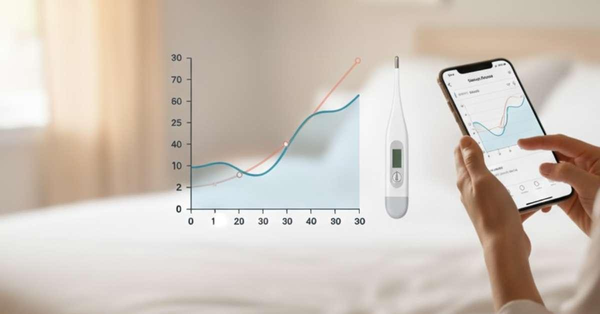
BBT reflects the body’s metabolic baseline. It rises slightly under the influence of progesterone, which is released after ovulation.

Typical BBT values:

  • Before ovulation: 36.1°C – 36.4°C
  • After ovulation: Rises by 0.3°C – 0.5°C
  • Sustained rise: Indicates ovulation has occurred

This temperature shift is subtle, so a sensitive basal thermometer (2 decimal readings) is essential.

How to Measure BBT Correctly

Accurate interpretation requires consistent measurement technique.

Best practices:

  1. Take your temperature immediately upon waking, before sitting up or talking.
  2. Measure at the same time every day, ideally after 3–4 hours of uninterrupted sleep.
  3. Use the same thermometer throughout your cycle.
  4. Measure orally, vaginally, or rectally but stick to one method for consistency.
  5. Record the temperature in a chart or fertility-tracking app.

Even small variations in routine can affect readings.

Understanding the BBT Curve

BBT follows a predictable biphasic (two-phase) pattern in ovulatory cycles.

1. The Follicular Phase (Before Ovulation)

  • Temperature stays low and stable.
  • Range: 36.1°C – 36.4°C.
  • Estrogen dominates, keeping metabolism slightly lower.

Interpretation:

A steady low temperature trend indicates your body is preparing for ovulation.

2. Ovulation and the Thermal Shift

Around ovulation, you will notice:

  • A sudden increase in BBT by 0.3°C – 0.5°C.
  • The rise occurs after the egg is released therefore BBT does not predict ovulation, it only confirms it afterward.

Interpretation:

  • If your temperature rises and stays elevated for at least 3 consecutive days, ovulation has occurred.
  • The day before the rise is considered your actual ovulation day.

3. The Luteal Phase (After Ovulation)

  • BBT stays elevated due to progesterone.
  • Range: 36.5°C – 36.9°C.
  • Lasts 12–16 days in a typical cycle.

Interpretation:

A stable high-temperature pattern indicates a healthy luteal phase.

4. The Drop Before Your Period

If pregnancy does not occur:

  • Progesterone falls
  • BBT drops back to the follicular range
  • This usually happens 1–2 days before menstruation

Interpretation:

A temperature drop near your expected period predicts that menstruation is about to begin.

How BBT Helps in Fertility Awareness

1. Confirming Ovulation Has Occurred

Ovulation is confirmed when:

  • A temperature rise of ≥ 0.3°C
  • Sustained for 3+ days

This helps identify your fertile window in hindsight and improves cycle understanding.

2. Understanding Your Luteal Phase Length

A normal luteal phase lasts 12–16 days.

  • Short luteal phase (< 10 days) may indicate luteal phase defect or progesterone insufficiency.
  • Very long luteal phases may indicate cycle irregularity or pregnancy.

BBT is often used alongside blood tests (progesterone on day 21 or 7 days post-ovulation) for evaluation.

3. Supporting Conception Planning

BBT helps:

  • Time intercourse around fertile days
  • Identify the exact post-ovulation window
  • Evaluate if cycles are anovulatory (no ovulation)

4. Natural Birth Control (With Caution)

BBT is part of fertility awareness methods such as the Sympto-Thermal Method, but should not be used alone for contraception.

  • ACOG emphasises that BBT must be combined with mucus tracking or LH kits for reliable fertility avoidance.

What Can Affect BBT Readings?

Several factors can cause inconsistent temperature patterns:

  • Illness or fever
  • Alcohol consumption
  • Poor sleep
  • Stress
  • Travel or time-zone changes
  • Medications such as thyroid drugs or sleep aids
  • Waking up at different times
  • Using a different thermometer

Tip: Mark these disturbances in your chart so you don’t misinterpret the curve.

Abnormal BBT Patterns and What They Mean

1. No Temperature Rise

This suggests anovulation, common in:

  • PCOS
  • Thyroid disorders
  • Excessive stress or weight changes
  • Very low BMI

If this occurs for 2–3 cycles, seek a gynecologist’s evaluation.

2. Fluctuating or “Rocky” Temperatures

Can occur if:

  • Sleep is inconsistent
  • Measurement timing varies
  • External factors disturb readings

Mild variability is normal; extreme variation may signal hormonal imbalance.

3. High Temperatures Throughout the Month

May indicate:

  • Fever
  • Thyroid hyperfunction
  • Incorrect thermometer usage

4. Very Short Luteal Phase

If your temperature drops too soon after ovulation (<10 days):

  • Could suggest inadequate progesterone support
  • A doctor may check progesterone levels or thyroid function

BBT and Pregnancy Detection

If pregnancy occurs:

  • Progesterone remains high
  • BBT stays elevated beyond 16 days past ovulation
  • A “triphasic pattern” may appear (a second temperature rise) in some women

Although promising, BBT cannot diagnose pregnancy — only a urine or blood test can.

Key Takeaways for Interpreting BBT

  • BBT confirms ovulation; it does not predict it.
  • A sustained rise of 0.3–0.5°C is the hallmark of ovulation.
  • A healthy luteal phase lasts 12–16 days.
  • BBT works best when combined with cervical mucus tracking or LH kits.
  • Irregular patterns may signal hormonal imbalance, anovulation, or lifestyle influences.
  • Consistent measurement is crucial for accuracy.

Conclusion

Interpreting Basal Body Temperature is a valuable, scientifically supported tool for understanding fertility, cycle health, and hormonal patterns. When tracked correctly over several months, BBT can provide deep insights into your ovulation, luteal phase quality, and menstrual rhythm. While not a standalone diagnostic tool, it empowers women with knowledge about their reproductive health supporting both conception awareness and menstrual cycle understanding.

References

  1. ACOG. Fertility Awareness and Ovulation Tracking Guidelines. 2023–2024.
  2. NHS UK. Natural Family Planning and BBT Charting.
  3. Stanford JB, et al. “Physiological Markers of Ovulation.” Fertility and Sterility.
  4. Barron ML. “Accuracy of Basal Body Temperature for Identifying Ovulation.” PubMed, 2020.
  5. Ecochard R, et al. “Thermal Shift Patterns in Menstrual Cycles.” Human Reproduction.
  6. WHO Reproductive Health Department. Fertility Awareness Methods, 2023.

Dr. Shreya Karan

About PeriodSakhi

PeriodSakhi is your trusted companion for understanding your menstrual health. With easy-to-use tools, it helps you track your periods, ovulation, fertility, moods, and symptoms, while providing insights into your overall reproductive and hormonal health. PeriodSakhi also serves as a supportive online community where women can share experiences, find reliable information, and access expert-backed guidance on menstrual health, PCOS, pregnancy, lifestyle, and more.

Disclaimer

The views, thoughts, and opinions expressed in this article/blog are solely those of the author and do not necessarily reflect the views of PeriodSakhi. Any omissions, errors, or inaccuracies are the responsibility of the author. PeriodSakhi assumes no liability or responsibility for any content presented. Always consult a qualified medical professional for specific advice related to menstrual health, fertility, pregnancy, or related conditions.

Comments ()

Start the conversation

Be the first one to comment

No comments yet. Start the conversation by leaving the first comment!
Recent Articles

Why Menstrual Leave Matters in India’s Work Culture
Wellness

Why Menstrual Leave Matters in India’s Work Culture

Dec 03, 2025Dr. Akanksha Priya
How the Menstrual Cycle Affects Fertility
Cycle Phase

How the Menstrual Cycle Affects Fertility

Nov 27, 2025Dr. Akanksha Priya
Fertility-Friendly Exercise Routine: A Complete Medical Guide
Wellness

Fertility-Friendly Exercise Routine: A Complete Medical Guide

Nov 27, 2025PeriodSakhi Editorial Team
Understanding the Role of LH and FSH in Fertility
Body & Mind

Understanding the Role of LH and FSH in Fertility

Nov 27, 2025PeriodSakhi Editorial Team