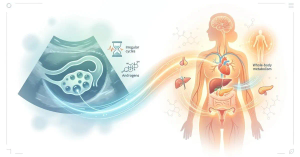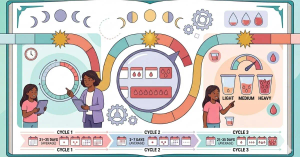
Ovulation is the process in which a mature egg is released from the ovary and becomes available for fertilisation. It usually occurs around the midpoint of the menstrual cycle, but the exact timing can vary. Recognising ovulation symptoms can help women understand their fertile window, track hormonal patterns, identify cycle irregularities, and make informed decisions about pregnancy planning or contraception.
What it feels like:
Why it happens:
Mittelschmerz results from the stretching or rupture of the ovarian follicle releasing the egg. Some women may also feel pelvic fullness due to increased blood flow and ovarian activity.
Medical evidence:
PubMed studies show that 21–40% of women experience ovulation pain, and it is considered a normal physiological symptom unless severe.
When to worry:
Cervical mucus (CM) is one of the most reliable indicators of ovulation.
Before ovulation: CM becomes creamy or lotion-like.
During ovulation: CM becomes
Why it happens:
Rising estrogen levels make cervical mucus more fertile to help sperm survive and swim efficiently.
Medical evidence:
The NHS highlights cervical mucus monitoring as an effective natural fertility awareness method when done consistently.
Several women naturally experience a rise in sexual desire just before or during ovulation.
Why it happens:
The surge in estrogen and testosterone around ovulation increases libido as the body biologically prepares for potential fertilisation.
Medical evidence:
Research published in Hormones and Behavior confirms a statistically significant rise in sexual motivation around ovulation.
Some women experience tenderness or mild discomfort in their breasts around ovulation.
Why it happens:
Fluctuating estrogen levels before ovulation and rising progesterone after ovulation can trigger temporary breast soreness.
What it means:
This is a normal hormonal response and usually mild. Severe pain should be evaluated.
BBT is your body’s temperature at rest.
Pattern:
Why it matters:
Tracking BBT for 2–3 cycles helps identify when ovulation has already occurred. It cannot predict ovulation but confirms it retrospectively.
Medical evidence:
ACOG recognises BBT charting as one of the standard natural fertility awareness tools when used properly.
For women comfortable with internal exams, cervical position can also indicate ovulation.
During ovulation, the cervix becomes:
Why it happens:
Estrogen causes cervical softening and opening to improve fertility.
Medical note:
This method is optional and not necessary for all women but can be useful alongside other signs.
Some women notice light pink or brown spotting during ovulation.
Why it happens:
A temporary estrogen dip that occurs at ovulation may cause minor endometrial shedding.
Medical evidence:
Spotting is reported in up to 5% of women and is typically harmless.
Seek care if:
Interestingly, some women report:
Why it happens:
Estrogen peak during ovulation may enhance sensory processing and mood.
Medical evidence:
Neurological studies show subtle sensory changes during the high-fertility phase, though this varies widely.
A temporary increase in estrogen can cause mild bloating.
Why it happens:
Fluid retention tends to peak around ovulation due to hormonal fluctuations.
Many women describe feeling:
Why it happens:
The hormonal combination of high estrogen and rising LH (Luteinizing Hormone) positively impacts mood and vitality.
These urine tests detect the LH surge, which occurs 24–36 hours before ovulation.
A gynecologist can track follicle growth and ovulation using repeated scans, the gold standard for precision.
A serum progesterone test done 7 days after suspected ovulation can confirm if ovulation has occurred.
Consult a gynaecologist if you:
Understanding ovulation symptoms is a powerful tool for reproductive awareness. Whether you’re trying to conceive, avoid pregnancy, or simply understand your cycle better, recognising these signs helps you stay informed and proactive. Ovulation symptoms vary from woman to woman and even from cycle to cycle but knowing the common patterns empowers you to track your health more confidently.
About PeriodSakhi
PeriodSakhi is your trusted companion for understanding your menstrual health. With easy-to-use tools, it helps you track your periods, ovulation, fertility, moods, and symptoms, while providing insights into your overall reproductive and hormonal health. PeriodSakhi also serves as a supportive online community where women can share experiences, find reliable information, and access expert-backed guidance on menstrual health, PCOS, pregnancy, lifestyle, and more.
Disclaimer
The views, thoughts, and opinions expressed in this article/blog are solely those of the author and do not necessarily reflect the views of PeriodSakhi. Any omissions, errors, or inaccuracies are the responsibility of the author. PeriodSakhi assumes no liability or responsibility for any content presented. Always consult a qualified medical professional for specific advice related to menstrual health, fertility, pregnancy, or related conditions.
Start the conversation
No comments yet. Start the conversation by leaving the first comment!