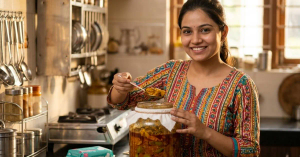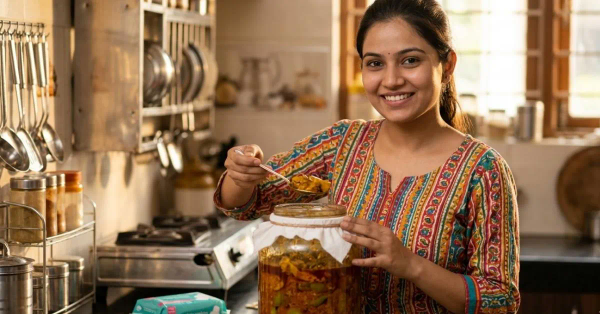
Across many Indian households, girls are often told not to touch pickles during their periods. Some are warned that the pickle will spoil, turn sour, rot, or develop fungus if touched by a menstruating woman. Others are told to avoid entering kitchens entirely during menstruation.
For generations, this belief has been passed down quietly from mothers, grandmothers, and relatives. Many girls follow it without questioning where it came from or whether it has any scientific basis.
Today, however, growing awareness around menstrual health is encouraging people to ask an important question:
Can menstruation actually spoil food or pickles?
The simple scientific answer is no.
Periods do not make a person impure, toxic, or capable of contaminating food merely by touch. The belief surrounding pickles is a cultural myth, not a medical fact. Yet the story behind this myth is deeply connected to India’s history, hygiene practices, gender roles, and traditional understanding of menstruation.
Understanding how this belief began can help separate culture from science while reducing shame around periods.
Menstruation is the shedding of the uterine lining when pregnancy does not occur during a reproductive cycle. Blood and tissue leave the body through the vagina over several days.
From a medical perspective:
Menstrual blood is not poisonous
Menstruation does not release harmful chemicals through the skin
Touching food during periods does not contaminate it
There is no biological mechanism by which periods can spoil pickles
Modern gynecology and reproductive medicine clearly state that menstruation is a normal physiological process.
A menstruating person’s hands are no different from anyone else’s hands if they are clean and washed properly.
The origins are likely linked to practical concerns that existed centuries ago.
Traditional Indian pickles were stored for long periods without refrigeration. They depended heavily on:
Salt
Oil
Sunlight
Hygiene during preparation
Even slight moisture or contamination could spoil an entire jar.
In earlier times, before modern sanitation and packaged menstrual products, maintaining strict hygiene during menstruation was difficult. Women often used cloth pads that required repeated washing and drying, sometimes in private or hidden conditions.
Because of these challenges, families may have restricted menstruating women from handling preserved foods to reduce any chance of contamination not because periods were magical or impure, but because food preservation was extremely sensitive.
Over time, this practical caution slowly transformed into a superstition.
In many cultures, menstruation became associated with ritual impurity rather than physical dirtiness.
Women during periods were often:
Asked to rest separately
Kept away from kitchens
Excluded from religious activities
Restricted from touching stored food
As these practices continued across generations, girls grew up hearing statements like:
“Pickles will rot if you touch them.”
“Your body heat spoils the food.”
“Periods carry negative energy.”
None of these beliefs are scientifically proven.
However, repeated social conditioning made them feel true.
One common explanation given in Indian households is that menstruating women have “increased body heat,” which supposedly spoils fermented or preserved foods like pickles.
Scientifically, there is no evidence supporting this claim.
While hormonal changes during menstruation can slightly affect body temperature and cause symptoms such as sweating or warmth, these changes are too minor to spoil food through touch.
Pickles spoil mainly because of:
Bacterial contamination
Fungal growth
Excess moisture
Poor storage
Dirty utensils
Insufficient oil or salt
A menstruating person’s touch alone cannot chemically alter a pickle jar.
Food contamination happens due to microorganisms such as bacteria, fungi, or viruses — not because of menstruation.
Anyone, regardless of gender or menstrual status, can contaminate food if:
Hands are unwashed
Utensils are dirty
Moisture enters preserved food
Storage conditions are poor
Similarly, anyone with proper hygiene can safely prepare food during menstruation.
Doctors and public health experts strongly emphasize that menstrual stigma has no biological basis.
According to menstrual health research, myths linking periods to impurity contribute significantly to shame, social exclusion, and poor mental well-being among girls and women. (pmc.ncbi.nlm.nih.gov)
For many girls, being told not to touch pickles may seem small at first. But repeated restrictions during menstruation can create deeper emotional effects.
Many menstruators report feeling:
Dirty
Untouchable
Embarrassed
Ashamed of their bodies
Excluded from family activities
Young girls often internalize the message that something is “wrong” with them during periods.
Research shows that menstrual stigma can negatively affect:
Confidence
Body image
School participation
Emotional health
Social interaction
In India especially, silence around menstruation sometimes prevents girls from asking questions or understanding their own bodies properly.
Modern conversations around menstruation have encouraged many women to openly challenge these beliefs.
On social platforms and community forums, menstruators commonly say:
“I touched pickles during periods and nothing happened.”
“The pickle spoiled because of moisture, not menstruation.”
“I was made to feel impure growing up.”
“These rules were followed blindly without explanation.”
At the same time, some women continue following these customs out of respect for family traditions, even if they personally do not believe the myth scientifically.
This reflects an important reality:
Cultural practices are deeply emotional and often tied to identity, family, and upbringing.
The goal is not to shame traditions, but to separate supportive customs from harmful misinformation.
Menstrual myths survive because they are repeated socially, often without scientific discussion.
Several factors contribute:
Lack of menstrual education
Cultural conditioning
Silence around reproductive health
Fear of disrespecting elders
Gender-based stigma
When girls are told something repeatedly from childhood, it becomes normalized.
Breaking these myths requires:
Open conversations
Scientific awareness
Compassionate education
Respectful questioning of traditions
Yes.
A girl or woman can safely:
Touch pickles
Cook food
Enter kitchens
Participate in daily activities
during menstruation, provided normal hygiene practices are followed.
There is no scientific evidence that menstruation spoils food.
The real factors affecting pickle preservation are hygiene, moisture control, salt concentration, oil content, and storage conditions — not the menstrual cycle of the person touching the jar.
Menstrual beliefs are often emotionally rooted in family and tradition. Some families may continue certain customs as a matter of comfort or faith.
However, no girl should be made to feel dirty, cursed, or harmful because she is menstruating.
A balanced approach means:
Respecting personal beliefs
Encouraging scientific understanding
Avoiding shame-based restrictions
Teaching girls that periods are normal
Periods are not signs of impurity. They are signs of a functioning reproductive system.
The belief that girls should not touch pickles during periods is one of India’s most common menstrual myths. While it may have originated from older food preservation practices and social customs, modern science does not support the idea that menstruation can spoil food.
Pickles spoil because of bacteria, fungi, moisture, or poor hygiene not because a menstruating person touched them.
Today, increasing menstrual awareness is helping people challenge outdated beliefs and replace shame with understanding. Conversations around menstruation should focus on health, dignity, and education rather than fear and stigma.
No girl should grow up believing that her natural biological process makes her “unclean” or harmful to others.
PMC – Menstrual Hygiene: Knowledge and Practice Among Adolescent Girls
Journal of Family Medicine and Primary Care – Menstrual Myths and Beliefs
About PeriodSakhi
PeriodSakhi is your trusted companion for understanding your menstrual health. With easy-to-use tools, it helps you track your periods, ovulation, fertility, moods, and symptoms, while providing insights into your overall reproductive and hormonal health. PeriodSakhi also serves as a supportive online community where women can share experiences, find reliable information, and access expert-backed guidance on menstrual health, PCOS, pregnancy, lifestyle, and more.
Disclaimer
The views, thoughts, and opinions expressed in this article/blog are solely those of the author and do not necessarily reflect the views of PeriodSakhi. Any omissions, errors, or inaccuracies are the responsibility of the author. PeriodSakhi assumes no liability or responsibility for any content presented. Always consult a qualified medical professional for specific advice related to menstrual health, fertility, pregnancy, or related conditions.
Start the conversation
No comments yet. Start the conversation by leaving the first comment!