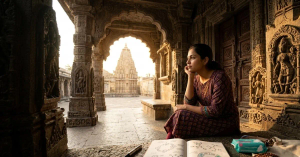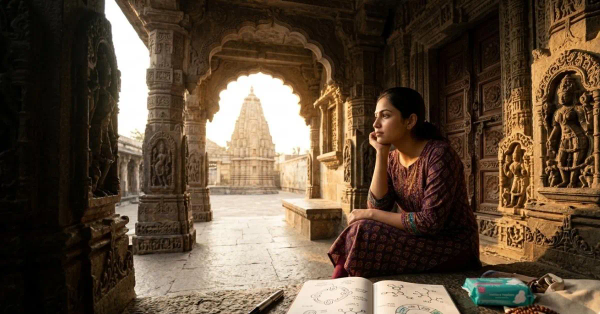
Menstruation is a completely natural biological process. Yet for centuries, women and menstruators across many cultures have been told that they should not enter temples, perform religious rituals, or participate in spiritual activities during their periods. In India especially, this belief continues to influence families, traditions, and even personal identity.
Some people see it as a matter of faith and ritual purity. Others consider it a harmful myth rooted in patriarchy and misinformation. Today, as conversations around menstrual health and gender equality become more open, many are asking an important question: Where did this belief actually come from, and does science support it?
The answer is complex. The restriction did not arise from one single reason. It evolved through a mix of ancient cultural practices, social structures, religious interpretations, lack of menstrual hygiene facilities in earlier times, and ideas about purity and rest.
Understanding the historical and scientific context is important because many menstruators still grow up feeling shame, guilt, or “impurity” during a normal bodily process.
Menstruation occurs when the lining of the uterus sheds because pregnancy has not occurred during a reproductive cycle. Blood and tissue exit through the vagina over 3–7 days. It is controlled by hormones such as estrogen and progesterone.
Scientifically, menstruation is:
Not dirty blood
Not toxic
Not impure
Not contagious
Not harmful to religious spaces or people
Modern medicine clearly states that menstruation is a healthy reproductive function. There is no scientific evidence showing that a menstruating woman can contaminate food, temples, idols, or spiritual environments simply by her presence.
The stigma largely comes from cultural interpretations rather than biology.
The origins are deeply tied to ancient social and religious systems.
Some references from later Hindu texts such as the Manusmriti and certain Dharmashastra traditions described menstruation as a state of “ritual impurity” or ashaucha. These texts advised temporary separation from rituals, cooking, and sacred activities during menstruation.
One ancient Vedic narrative linked menstruation to the transfer of guilt from the god Indra after he committed a grave sin. Over time, such stories influenced social attitudes and connected menstruation with ideas of impurity and cleansing rituals.
However, historians and scholars also point out something important: the earliest Vedic texts do not contain a direct universal ban stating that menstruating women cannot enter temples. In fact, formal temple culture itself developed much later in Indian history.
This suggests that many restrictions evolved socially over time rather than coming directly from one fixed divine rule.
Many scholars, feminists, and even traditional families argue that these practices may initially have had practical intentions.
In ancient times:
Women had no sanitary pads or menstrual hygiene products
Water access and sanitation were limited
Temples often required long travel by foot
Household labor was physically exhausting
Menstrual pain had no medical relief
Because of this, menstruating women may have been encouraged to rest and temporarily avoid strenuous household or ritual responsibilities.
Some menstruators and online community discussions today still mention this interpretation. Several women describe being told that the original purpose was to allow physical rest during periods, but over generations the message changed from “you should rest” to “you are impure.”
This transformation is important. What may once have been a support-based practice slowly became associated with shame and exclusion in many households.
The idea of ritual purity is not unique to Hinduism. Many religions historically had menstrual restrictions.
Examples include:
Judaism traditionally required ritual cleansing after menstruation
Certain Christian traditions discouraged menstruating women from communion
Some Islamic interpretations exempt menstruating women from fasting and prayer during menstruation
Indigenous cultures across the world practiced menstrual isolation rituals
Researchers studying religion and menstruation explain that many ancient societies viewed bodily fluids including blood, semen, and childbirth-related fluids as spiritually powerful or ritually sensitive.
In many cultures, menstruation became associated with “liminality,” meaning a temporary transitional state between purity and impurity.
However, modern interpretations increasingly challenge these ideas, especially when they result in discrimination or emotional harm.
Experiences differ greatly.
Some menstruators continue to follow temple restrictions voluntarily because they see them as part of faith and tradition. For them, avoiding temples during menstruation is not oppression but spiritual discipline.
Others describe the experience very differently.
Many women report feeling:
Ashamed during periods
Untouchable within their own homes
Excluded from festivals and prayer
Emotionally isolated
Confused about their bodies
In online discussions, menstruators often say the most painful part is not avoiding the temple itself, but being treated as “unclean” or inferior.
One recurring perspective from menstruators is this:
“If periods are natural and created by nature or God, why should they make someone spiritually unacceptable?”
This question reflects the growing movement toward menstrual dignity and body acceptance.
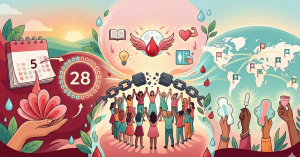
The shift began with education, feminism, medical science, and menstrual health advocacy.
Researchers found no biological basis for considering menstruating women impure. Public health experts also recognized that menstrual stigma harms mental health, education, and self-esteem.
Studies show that menstrual taboos can lead to:
Anxiety and shame
Poor menstrual hygiene practices
Lack of confidence
School absenteeism
Reduced participation in social activities
In India, activists, doctors, educators, and legal debates such as the discussions around the Sabarimala Temple entry issue brought menstrual discrimination into mainstream conversation.
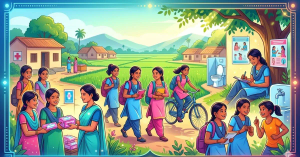
Modern menstrual health campaigns now emphasize that:
Menstruation is normal
Religious participation should be a personal choice
Women should not be forced into isolation
Rest should be optional, not compulsory
Cultural practices must not become tools for discrimination
No scientific evidence supports the claim that menstruating women should avoid temples.
Menstrual blood does not emit harmful energy, contaminate sacred spaces, or reduce spiritual purity in any measurable biological sense.
The only medically valid reason someone may avoid religious gatherings during menstruation is personal comfort. Some menstruators experience:
Severe cramps
Fatigue
Migraine
Heavy bleeding
Endometriosis-related pain
In such situations, resting is beneficial but that is a health choice, not a spiritual impurity.
Conversations about menstruation and religion require sensitivity.
Faith is deeply personal. Some women willingly follow traditional practices and feel spiritually connected to them. Others experience the same rules as restrictive and emotionally damaging.
The real issue is not whether someone chooses to avoid temples during menstruation. The issue arises when menstruators are made to feel dirty, lesser, or spiritually inferior because of a normal biological process.
A healthy modern perspective allows room for both:
Respect for personal religious practices
Scientific understanding and menstrual dignity
The belief that women should not visit temples during menstruation comes from a combination of ancient ritual systems, social customs, patriarchal interpretations, hygiene limitations of earlier times, and evolving religious traditions.
Science does not support the idea that menstruation is impure. Menstruation is a normal physiological process essential for reproduction and overall reproductive health.
What began in some communities as a period of rest or ritual separation gradually became associated with shame and exclusion. Today, many menstruators, healthcare professionals, and educators are working to replace silence and stigma with awareness, compassion, and informed choice.
Ultimately, menstruation should never be a reason for humiliation. Whether a menstruator chooses to enter a temple or not should come from personal belief and comfort not fear, shame, or misinformation.
NCBI – Menstruation and Religion: Developing a Critical Menstrual Studies Approach
PMC – Menstruation Related Myths in India
SAGE Journals – The Sacred and the Profane: Menstrual Flow and Religious Values
NCBI – The Menstrual Mark: Menstruation as Social Stigma
Verywell Mind – Why Period Stigma Exists and How to Normalize Menstruation
Times of India – Why Are We Still Stigmatizing Menstruation?
About PeriodSakhi
PeriodSakhi is your trusted companion for understanding your menstrual health. With easy-to-use tools, it helps you track your periods, ovulation, fertility, moods, and symptoms, while providing insights into your overall reproductive and hormonal health. PeriodSakhi also serves as a supportive online community where women can share experiences, find reliable information, and access expert-backed guidance on menstrual health, PCOS, pregnancy, lifestyle, and more.
Disclaimer
The views, thoughts, and opinions expressed in this article/blog are solely those of the author and do not necessarily reflect the views of PeriodSakhi. Any omissions, errors, or inaccuracies are the responsibility of the author. PeriodSakhi assumes no liability or responsibility for any content presented. Always consult a qualified medical professional for specific advice related to menstrual health, fertility, pregnancy, or related conditions.
Start the conversation
No comments yet. Start the conversation by leaving the first comment!