“Your body often gives subtle signals before serious ones, learning to read them can prevent both panic and delay.”
Bloating, irregular periods, acne, and mood swings are common concerns among women. While these symptoms are often harmless and linked to routine hormonal fluctuations, persistent or unusual patterns can raise concern.
A common question many patients ask is:
“Should I get an ultrasound (USG abdomen) done immediately?” Medical authorities like the World Health Organization and National Health Service recommend a guided, stepwise approach rather than immediate imaging.
This article is meant for general awareness only and will help you understand when an ultrasound might be necessary and when it may not.
Bloating alone is not always a warning sign. In fact, it is one of the most frequent complaints seen in daily practice.
Indigestion and gas
High-salt or heavy meals
Premenstrual hormonal changes
Stress and lifestyle factors
Example:
A young woman experiences bloating mainly in the evening after meals, which improves by morning. This is typically digestive in nature and does not require imaging.
Bloating combined with hormonal changes can sometimes indicate an underlying issue.
Irregular or missed periods
Acne or oily skin
Excess facial hair
Weight fluctuations
Mood disturbances
These may be seen in conditions like Polycystic Ovary Syndrome, but diagnosis is not based on ultrasound alone.
An ultrasound should be considered only after proper clinical evaluation. The following situations may require further investigation:
If bloating:
Lasts more than 2–3 weeks continuously
Does not improve with diet or lifestyle changes
Feels progressive or worsening
Then it should not be ignored.
Pain adds clinical significance.
Continuous dull pain
Sudden sharp pain
Pain during intercourse
These may indicate ovarian issues such as cysts or, in rare cases, Ovarian Cancer.
If you notice:
Increase in abdominal size
A feeling of fullness not related to food
A palpable lump
Medical evaluation becomes necessary.
Occasional irregular cycles are common. However, consult a doctor if there is:
Absence of periods for months
Very heavy bleeding
Severe pain affecting routine life
Conditions such as Endometriosis may need evaluation.
Symptoms like:
Loss of appetite
Early satiety
Unintentional weight loss
Should always be taken seriously.
If you are trying to conceive and have:
Irregular cycles
Chronic bloating
Hormonal imbalance
An ultrasound may be part of a structured fertility evaluation.
It is equally important to understand when imaging may not be needed right away.
Bloating is occasional or meal-related
Symptoms are mild and short-term
Changes occur only around your menstrual cycle
There is a clear dietary trigger
According to the Cleveland Clinic, unnecessary imaging can sometimes lead to confusion rather than clarity.
Self-prescribing an ultrasound can do more harm than good.
Overdiagnosis:
Small, harmless findings like functional cysts may cause unnecessary anxiety.
Misinterpretation:
Reports need clinical correlation; otherwise, they can be misleading.
Unnecessary Expense:
Repeated scans without indication increase costs.
Anxiety Loop:
Incidental findings may lead to more tests, even when not required.
Best practice, as aligned with the World Health Organization and National Health Service, includes:
Detailed symptom discussion
Clinical examination
Basic investigations if needed
Ultrasound only when indicated
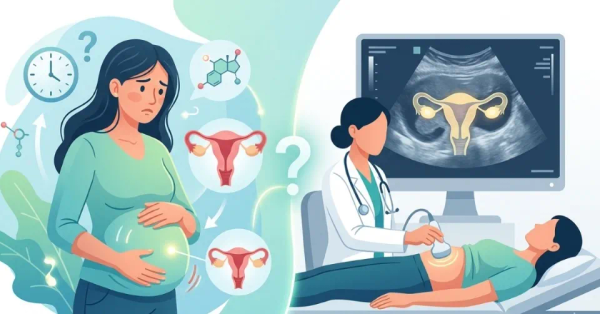
If recommended, an ultrasound can help assess:
Ovaries (cysts, PCOS changes)
Uterus (fibroids, lining)
Abdomen (fluid, masses)
It is a safe, non-invasive, and radiation-free test.
From a practitioner’s point of view, one of the most important aspects is reassurance with responsibility.
Not every symptom is dangerous.
Not every patient needs a scan.
But the right patient at the right time absolutely does.
Unexplained bloating and hormonal symptoms should never be ignored but they also should not cause immediate panic.
An ultrasound abdomen is a valuable diagnostic tool when used appropriately. The key lies in timely consultation, proper evaluation, and avoiding unnecessary tests.
If you are experiencing persistent bloating or hormonal symptoms:
Pay attention to your body
Track your symptoms
Do consult a gynaecologist or specialist healthcare provider
Do not directly go and get an ultrasound done on your own
NOTE: This article is for general awareness, and the right medical guidance will always ensure better outcomes.
World Health Organization – Women’s health and diagnostic care
National Health Service – Evaluation of bloating and pelvic symptoms
Cleveland Clinic – Imaging guidance and ovarian health
Standard gynaecology textbooks and evidence-based clinical practice guidelines
About PeriodSakhi
PeriodSakhi is your trusted companion for understanding your menstrual health. With easy-to-use tools, it helps you track your periods, ovulation, fertility, moods, and symptoms, while providing insights into your overall reproductive and hormonal health. PeriodSakhi also serves as a supportive online community where women can share experiences, find reliable information, and access expert-backed guidance on menstrual health, PCOS, pregnancy, lifestyle, and more.
Disclaimer
The views, thoughts, and opinions expressed in this article/blog are solely those of the author and do not necessarily reflect the views of PeriodSakhi. Any omissions, errors, or inaccuracies are the responsibility of the author. PeriodSakhi assumes no liability or responsibility for any content presented. Always consult a qualified medical professional for specific advice related to menstrual health, fertility, pregnancy, or related conditions.
Start the conversation
No comments yet. Start the conversation by leaving the first comment!