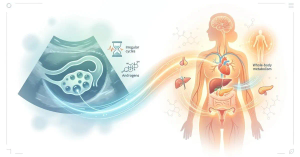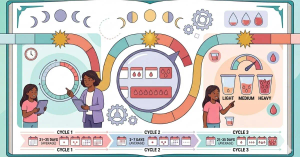
Understanding your ovulation signs is one of the most powerful ways to connect with your body whether you are trying to conceive or simply tracking your reproductive health. Ovulation is the phase in your menstrual cycle when your ovary releases an egg, making it the most fertile window of the month.
This article breaks down 12 medically recognized signs of ovulation in a clear, practical way, so you can identify your fertile days with confidence.
Ovulation typically occurs around the middle of your menstrual cycle, about 12–14 days before your next period. During this time, hormonal changes prepare your body for potential pregnancy.
The key hormone responsible is the luteinizing hormone (LH), which surges just before ovulation and triggers the release of the egg.
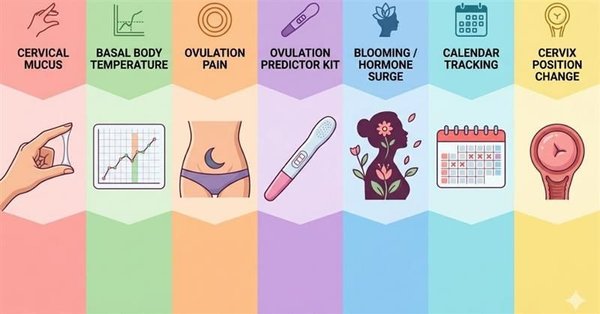
One of the most reliable natural signs of ovulation is a change in cervical mucus.
As ovulation approaches, your mucus becomes:
Clear
Stretchy (like egg whites)
Slippery
This type of mucus helps sperm travel easily through the cervix, increasing the chances of fertilization.
Clinical Insight: Estrogen causes this change, making cervical mucus a strong indicator of fertility.
Your basal body temperature is your body’s resting temperature measured first thing in the morning.
Before ovulation: Lower temperature
After ovulation: Slight increase (0.3–0.5°C)
This rise happens due to progesterone release after ovulation.
Important: BBT confirms ovulation after it has occurred, so it is best used along with other methods.
L
Some women feel a mild, one-sided pain in the lower abdomen during ovulation. This is known as mittelschmerz.
Duration: A few minutes to a few hours
Location: One side of the pelvis
It may occur due to the release of the egg from the ovary.
A natural increase in sexual desire around ovulation is common.
This is driven by hormonal changes especially a peak in estrogen and testosterone which enhance libido during your most fertile days.
Hormonal fluctuations around ovulation can make your breasts feel:
Sore
Sensitive
Slightly swollen
This is usually mild and temporary.
Ovulation predictor kits detect the LH surge in urine.
A positive result means ovulation is likely within 24–36 hours
Best used in the days leading up to expected ovulation
Medical Accuracy: OPKs are widely recommended in clinical practice for fertility tracking.
Some women experience slight abdominal bloating around ovulation due to hormonal changes and fluid retention.
This symptom is usually subtle but noticeable if you track your cycle regularly.
Hormonal changes may increase sensitivity to smells and even influence attraction patterns.
Though less commonly discussed, studies suggest subtle behavioral and sensory changes during peak fertility.
A small amount of spotting may occur during ovulation.
This can happen due to:
Sudden hormonal shifts
Follicle rupture
It is usually light pink or brown and lasts for a short duration.
Your cervix changes position and texture during ovulation:
Before ovulation: Low, firm, closed
During ovulation: High, soft, open
This change allows easier sperm entry.
Note: Checking cervix position requires practice and good hygiene.
Many women report feeling more:
Confident
Energetic
Attractive
This “blooming” effect is due to peak estrogen levels, which can:
Improve skin clarity
Boost mood
Enhance overall appearance
Tracking your menstrual cycle over months can help predict ovulation.
Ovulation usually occurs ~14 days before your next period
Apps and calendars can estimate your fertile window
Limitation: This method is less accurate in women with irregular cycles.
No single sign is 100% reliable on its own. The most effective way to track ovulation is by combining:
Cervical mucus observation
Basal body temperature charting
Ovulation predictor kits
Calendar tracking
This multi-method approach is often called fertility awareness-based methods (FABMs).
Consult a healthcare professional if:
You have irregular cycles
You are trying to conceive for over 12 months (or 6 months if over 35)
You experience severe ovulation pain
You notice unusual bleeding
Riya, a 28-year-old working professional, started tracking her cervical mucus and using OPKs. Within two months, she was able to accurately identify her fertile window and successfully conceive.
Understanding these signs can empower you to make informed reproductive choices.
Your body gives you multiple signals when you are most fertile. By learning to recognize ovulation symptoms like cervical mucus changes, basal body temperature rise, ovulation pain, and hormonal shifts, you can take control of your reproductive health naturally and effectively.
If you are trying to conceive or want to understand your cycle better, start tracking your ovulation symptoms today. Use a combination of natural signs and tools like ovulation predictor kits to improve accuracy.
For more evidence-based, easy-to-understand women’s health content, stay connected and take one step closer to understanding your body better.
National Health Service (NHS). Ovulation and fertility guidelines.
American College of Obstetricians and Gynecologists (ACOG). Fertility awareness methods.
Mayo Clinic. Ovulation symptoms and signs.
PubMed Indexed Studies on LH surge and cervical mucus patterns.
World Health Organization (WHO). Reproductive health and fertility tracking methods.
About PeriodSakhi
PeriodSakhi is your trusted companion for understanding your menstrual health. With easy-to-use tools, it helps you track your periods, ovulation, fertility, moods, and symptoms, while providing insights into your overall reproductive and hormonal health. PeriodSakhi also serves as a supportive online community where women can share experiences, find reliable information, and access expert-backed guidance on menstrual health, PCOS, pregnancy, lifestyle, and more.
Disclaimer
The views, thoughts, and opinions expressed in this article/blog are solely those of the author and do not necessarily reflect the views of PeriodSakhi. Any omissions, errors, or inaccuracies are the responsibility of the author. PeriodSakhi assumes no liability or responsibility for any content presented. Always consult a qualified medical professional for specific advice related to menstrual health, fertility, pregnancy, or related conditions.
Start the conversation
No comments yet. Start the conversation by leaving the first comment!