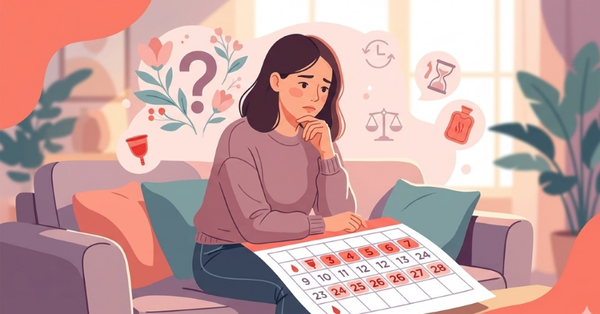
You check your calendar and pause. Your last period ended barely ten days ago, yet here you are again, bleeding. It feels too soon, too unexpected, and naturally, a question arises: Why is this happening?
Experiencing a period twice a month can feel unsettling, but medically, it is a fairly common concern. The key lies in understanding whether this is a temporary hormonal fluctuation or a sign of an underlying condition that needs attention.
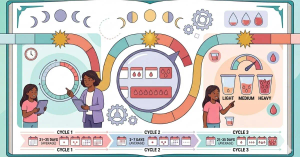
A normal menstrual cycle typically ranges from 21 to 35 days. When bleeding occurs more frequently—say every 15–20 days—it may be termed:
Occasional irregularity can happen. However, consistent cycles shorter than 21 days require evaluation.
Your menstrual cycle is controlled by a delicate balance of hormones. Even minor disruptions can cause early shedding of the uterine lining.
Common triggers include:
Hormonal imbalance remains the most common reason for frequent periods.
Some women experience light bleeding around ovulation, which occurs mid-cycle.
This bleeding is:
It may be mistaken for a second period but is typically harmless.
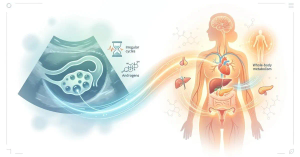
Polycystic Ovary Syndrome is a hormonal disorder affecting ovulation.
While many associate it with missed periods, it can also present as:
Uterine Fibroids are benign growths in the uterus that can disrupt normal bleeding patterns.
They may cause:
Polyps are small overgrowths of the uterine lining.
They can lead to:
Though often non-cancerous, they should be evaluated if symptoms persist.
The thyroid gland plays a significant role in regulating menstrual hormones.
Conditions such as:
can cause cycles to become shorter or irregular.
Hormonal birth control methods can temporarily disrupt your cycle.
You may experience:
This is especially common during the initial months.
Chronic stress affects the brain centers that regulate hormones.
This can result in:
Lifestyle balance plays a crucial role in menstrual regularity.
Endometriosis involves the growth of uterine-like tissue outside the uterus.
It may present with:
A period twice in one month may not be concerning if:
It is also commonly seen during:
Consult a doctor if you notice:
These may indicate underlying conditions that need diagnosis.
To understand the cause, your doctor may suggest:
Having a period twice a month can be confusing, but it is not always a sign of a serious problem. In many cases, it results from temporary hormonal shifts, stress, or natural variations in the cycle.
However, if the pattern continues, it may point toward conditions like Polycystic Ovary Syndrome, Uterine Fibroids, or thyroid imbalances.
Understanding your cycle and observing changes is an important step toward maintaining reproductive health.
If your periods are becoming frequent or unpredictable, do not ignore the signs. Seek timely medical advice and track your menstrual cycle regularly.
Awareness and early action can prevent complications and help you stay in control of your health.
About PeriodSakhi
PeriodSakhi is your trusted companion for understanding your menstrual health. With easy-to-use tools, it helps you track your periods, ovulation, fertility, moods, and symptoms, while providing insights into your overall reproductive and hormonal health. PeriodSakhi also serves as a supportive online community where women can share experiences, find reliable information, and access expert-backed guidance on menstrual health, PCOS, pregnancy, lifestyle, and more.
Disclaimer
The views, thoughts, and opinions expressed in this article/blog are solely those of the author and do not necessarily reflect the views of PeriodSakhi. Any omissions, errors, or inaccuracies are the responsibility of the author. PeriodSakhi assumes no liability or responsibility for any content presented. Always consult a qualified medical professional for specific advice related to menstrual health, fertility, pregnancy, or related conditions.
Start the conversation
No comments yet. Start the conversation by leaving the first comment!