Many women become confused when they notice light bleeding around the time their period is expected. Is it a normal period, or could it be implantation bleeding, one of the earliest possible signs of pregnancy?
Understanding the difference between implantation bleeding vs period can help women identify early pregnancy signs and decide when to take a pregnancy test.
According to health experts cited by Healthline, implantation bleeding may occur in some pregnancies when the fertilized egg attaches to the lining of the uterus. However, not every woman experiences it.
Implantation bleeding happens when a fertilized egg attaches to the lining of the uterus (endometrium).
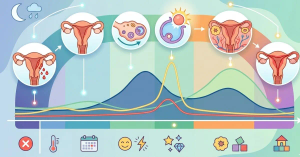
After ovulation, if sperm fertilizes the egg, the embryo travels through the fallopian tube and reaches the uterus. When it attaches to the uterine wall, small blood vessels may break, causing light spotting.
This usually occurs 6–12 days after ovulation.
Medical resources referenced by Healthline note that implantation bleeding is generally very light and short-lasting, often appearing as pink or brown spotting rather than heavy bleeding.
A menstrual period occurs when pregnancy does not happen during a menstrual cycle.
During each cycle, the body prepares the uterus for possible pregnancy by thickening the uterine lining. If fertilization does not occur, the lining breaks down and leaves the body through vaginal bleeding.
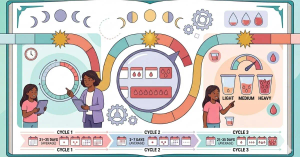
According to menstrual health guidance from the National Health Mission, menstruation is a normal biological process that typically lasts 3–7 days and occurs roughly every 21–35 days in most women.
Understanding the differences can help women recognize what type of bleeding they may be experiencing.
| Feature | Implantation Bleeding | Menstrual Period |
| Cause | Embryo attaching to uterine lining | Shedding of uterine lining |
| Timing | 6–12 days after ovulation | Around 14 days after ovulation |
| Flow | Very light spotting | Moderate to heavy bleeding |
| Color | Pink or brown | Bright red to dark red |
| Duration | Few hours to 1–2 days | 3–7 days |
| Clots | Rare | Often present |
| Cramps | Mild or minimal | Mild to moderate cramps |
Implantation bleeding typically:
• Appears as light spotting• Is pink, light red, or brown• Does not increase in flow• Stops within 1–2 days
Some women notice only a few drops when wiping.
A menstrual period usually:
• Starts light and becomes heavier• Requires pads, tampons, or menstrual cups• May include blood clots• Lasts 3–7 days
Bleeding may be accompanied by cramps, fatigue, and mood changes.
Some women experience early pregnancy symptoms along with implantation bleeding.
These may include:
• Breast tenderness• Mild abdominal discomfort• Fatigue• Nausea• Increased sense of smell• Frequent urination
According to reproductive health experts frequently cited by Healthline, these symptoms are linked to rising levels of human chorionic gonadotropin (hCG), the hormone detected in pregnancy tests.
Menstrual bleeding is often associated with premenstrual syndrome (PMS) symptoms, including:
• Lower abdominal cramps• Bloating• Mood swings• Back pain• Headache• Acne breakouts
These symptoms occur due to hormonal fluctuations involving estrogen and progesterone.
If you are unsure whether the bleeding is a period or implantation spotting, ask yourself the following questions.
Implantation bleeding is usually much lighter than a period.
Implantation bleeding rarely lasts longer than 48 hours.
Periods typically start with red bleeding, while implantation spotting is often pink or brown.
Implantation bleeding usually occurs a few days before the expected period.
Breast tenderness, nausea, or fatigue may indicate early pregnancy.
If several of these signs are present, taking a pregnancy test may be helpful.
Pregnancy tests detect the hormone hCG.
For the most accurate result:
• Wait 3–5 days after spotting stops, or• Test after a missed period
Testing too early may lead to false negative results.
Many gynecologists emphasize that implantation bleeding is not experienced by every pregnant woman.
Doctors also advise that women should not rely on spotting alone to confirm pregnancy.
If there is uncertainty, the best approach is:
• Take a pregnancy test• Monitor symptoms• Consult a healthcare professional if bleeding becomes heavy or painful
Although light spotting can occur in early pregnancy, you should seek medical care if you experience:
• Heavy bleeding• Severe abdominal pain• Dizziness or fainting• Bleeding lasting several days
These symptoms may indicate conditions that require medical evaluation.
If you notice unusual spotting and are unsure whether it is a period or possible implantation bleeding, do not ignore the signs your body is giving you.
Track your menstrual cycle, observe the bleeding pattern, and consider taking a pregnancy test if your period is delayed.
If symptoms feel unusual or concerning, consult a qualified healthcare professional for proper guidance and reassurance.
• Healthline – Implantation bleeding and early pregnancy symptoms
• National Health Mission – Menstrual health and reproductive health guidelines
• World Health Organization – Menstrual health and reproductive health information
• Standard gynecology and obstetrics clinical textbooks on menstrual physiology and early pregnancy
About PeriodSakhi
PeriodSakhi is your trusted companion for understanding your menstrual health. With easy-to-use tools, it helps you track your periods, ovulation, fertility, moods, and symptoms, while providing insights into your overall reproductive and hormonal health. PeriodSakhi also serves as a supportive online community where women can share experiences, find reliable information, and access expert-backed guidance on menstrual health, PCOS, pregnancy, lifestyle, and more.
Disclaimer
The views, thoughts, and opinions expressed in this article/blog are solely those of the author and do not necessarily reflect the views of PeriodSakhi. Any omissions, errors, or inaccuracies are the responsibility of the author. PeriodSakhi assumes no liability or responsibility for any content presented. Always consult a qualified medical professional for specific advice related to menstrual health, fertility, pregnancy, or related conditions.
Start the conversation
No comments yet. Start the conversation by leaving the first comment!