Imagine this: you wake up feeling unusually energetic and confident one week, and then a few days later, you feel bloated, tired, or emotionally sensitive without any clear reason. Many women experience this shift every month, often without fully understanding why it happens.
The answer lies in the menstrual cycle—a beautifully coordinated, hormone-driven process that prepares the body for pregnancy. Understanding your cycle is not just about periods. It is about knowing your body, predicting changes, and taking control of your health.
This guide will walk you through the menstrual cycle in a simple yet medically accurate way, so you can understand what is happening inside your body every month.
The menstrual cycle is a monthly series of hormonal changes that prepare the female body for pregnancy. If pregnancy does not occur, the body sheds the lining of the uterus, resulting in a menstrual period.
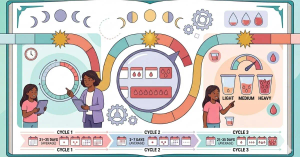
A typical cycle lasts 21 to 35 days, with 28 days being the average. However, variation is completely normal, especially in teenagers or during stressful periods.
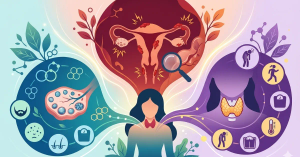
The cycle is regulated by a complex interaction between the brain and reproductive organs, mainly involving the:
Hypothalamus
Pituitary gland
Ovaries
Uterus
These organs communicate through hormones to maintain a regular cycle.
Four main hormones control the menstrual cycle:
Estrogen: Builds the uterine lining and supports ovulation
Progesterone: Maintains the uterine lining after ovulation
Follicle-Stimulating Hormone (FSH): Stimulates egg development in the ovaries
Luteinizing Hormone (LH): Triggers ovulation
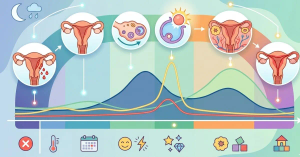
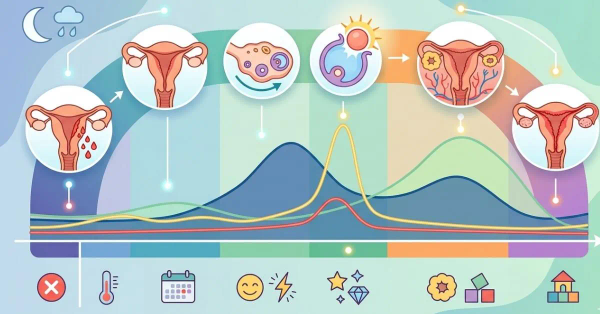
These hormones rise and fall in a predictable pattern, dividing the menstrual cycle into phases.
This phase begins on the first day of your period.
What happens:
The uterus sheds its lining (endometrium)
Blood and tissue flow out through the vagina
Hormone levels (estrogen and progesterone) are low
Common symptoms:
Bleeding (3–7 days)
Cramps (due to uterine contractions)
Fatigue
Lower back pain
What helps:
Warm compress for cramps
Light activity like walking or yoga
Iron-rich foods such as spinach and jaggery
This phase overlaps with the menstrual phase but continues after bleeding stops.
What happens:
The brain releases FSH
Ovaries start maturing follicles (each containing an egg)
Estrogen levels begin to rise
The uterine lining starts rebuilding
How you may feel:
Gradual increase in energy
Improved focus and mood
What helps:
Start new tasks or planning
Eat protein-rich foods and fresh fruits
This is the most important phase for fertility.
What happens:
A surge in LH causes the ovary to release a mature egg
The egg travels through the fallopian tube
The egg survives for about 12–24 hours
Signs of ovulation:
Clear, stretchy vaginal discharge (like egg white)
Mild lower abdominal pain (mittelschmerz)
Slight increase in body temperature
Why it matters:
This is the fertile window
Pregnancy is most likely if intercourse occurs during this time
This phase begins after ovulation.
What happens:
The empty follicle becomes the corpus luteum
Progesterone levels rise
The uterine lining thickens to support pregnancy
If pregnancy does not occur:
Progesterone drops
The uterine lining breaks down
The next period begins
Common symptoms:
Bloating
Breast tenderness
Mood swings
Food cravings
This is often referred to as Premenstrual Syndrome (PMS).
The symptoms you experience are directly linked to hormonal fluctuations:
Low estrogen → fatigue, low mood
Rising estrogen → energy, confidence
High progesterone → calmness or sluggishness
Hormonal drop → irritability, bloating
Understanding this helps you avoid self-blame and instead work with your body’s natural rhythm.
According to guidelines from global health bodies, a healthy menstrual cycle typically includes:
Cycle length between 21–35 days
Bleeding lasting 3–7 days
Mild to moderate discomfort
Predictable pattern month to month
You should consult a doctor if you experience:
Periods lasting more than 7 days
Very heavy bleeding (changing pads every 1–2 hours)
Severe pain affecting daily activities
Missed periods (not pregnant)
Cycles shorter than 21 days or longer than 35 days
Sudden changes in cycle pattern
These could indicate conditions like:
Polycystic Ovary Syndrome (PCOS)
Thyroid disorders
Hormonal imbalance
Uterine fibroids
Include:
Iron-rich foods (green leafy vegetables, dates)
Healthy fats (nuts, seeds)
Whole grains
Helps regulate hormones
Reduces PMS symptoms
Chronic stress affects hormone balance. Try:
Meditation
Deep breathing
Journaling
Aim for 7–8 hours of quality sleep to maintain hormonal stability.
Use a calendar or app to:
Predict periods
Identify irregularities
Understand symptom patterns
Your menstrual cycle is often called the “fifth vital sign” because it reflects your overall health. Irregular cycles can be an early indicator of underlying issues such as:
Nutritional deficiencies
Hormonal disorders
Chronic stress
Paying attention to your cycle is one of the simplest ways to monitor your well-being.
Myth: Periods must always come every 28 days
Fact: A cycle between 21–35 days is normal
Myth: Severe pain is normal
Fact: Mild discomfort is common, but severe pain needs evaluation
Myth: You cannot exercise during periods
Fact: Light to moderate exercise can actually reduce symptoms
Understanding your menstrual cycle is not just about knowing when your period will come. It is about understanding your body’s signals, respecting its changes, and supporting it through each phase.
When you align your lifestyle with your cycle, you can improve your physical health, emotional well-being, and productivity.
Start today. Track your next cycle, observe how you feel in each phase, and make small lifestyle adjustments accordingly. If something feels off, do not ignore it, consult a healthcare professional early.
Your menstrual cycle is not a burden. It is a powerful indicator of your health. Learn it, understand it, and take charge of it.
National Health Service (NHS). Menstrual cycle overview and period health
World Health Organization (WHO). Adolescent and reproductive health guidelines
Cleveland Clinic. Menstrual cycle phases and hormone regulation
PubMed. Hormonal regulation of the menstrual cycle and reproductive physiology
American College of Obstetricians and Gynecologists (ACOG). Menstruation in girls and adolescents: using the menstrual cycle as a vital sign
About PeriodSakhi
PeriodSakhi is your trusted companion for understanding your menstrual health. With easy-to-use tools, it helps you track your periods, ovulation, fertility, moods, and symptoms, while providing insights into your overall reproductive and hormonal health. PeriodSakhi also serves as a supportive online community where women can share experiences, find reliable information, and access expert-backed guidance on menstrual health, PCOS, pregnancy, lifestyle, and more.
Disclaimer
The views, thoughts, and opinions expressed in this article/blog are solely those of the author and do not necessarily reflect the views of PeriodSakhi. Any omissions, errors, or inaccuracies are the responsibility of the author. PeriodSakhi assumes no liability or responsibility for any content presented. Always consult a qualified medical professional for specific advice related to menstrual health, fertility, pregnancy, or related conditions.
Start the conversation
No comments yet. Start the conversation by leaving the first comment!